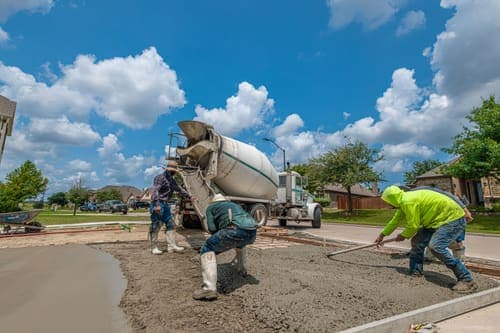
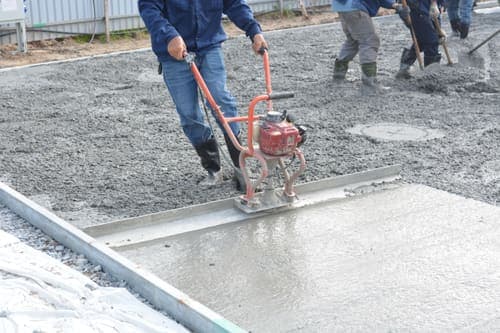
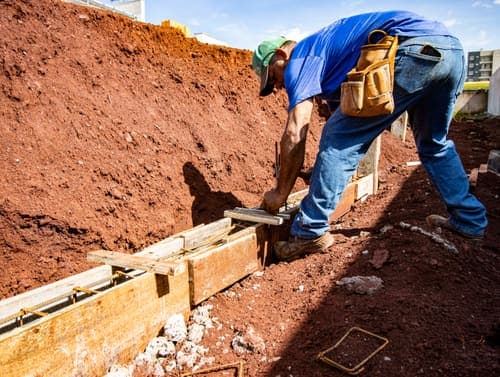
Around here we get four seasons, and two of them are actively trying to break your concrete. Water gets into a hairline crack in November, freezes, thaws in that fake spring week in February, freezes again, and by the time the Big E rolls around your walkway looks like a jigsaw puzzle somebody dropped.
I'm Tony. My crew pours and fixes concrete across Springfield and the towns around it, and we're pretty plain about how we do it: proper base, proper thickness, control joints cut where they belong, and no pouring a slab on frozen ground just to get paid before Christmas.
Most of our work is flat and boring in the best way. A concrete driveway that drains toward the street instead of your garage door. A concrete patio big enough for the grill and everybody's chairs. Sidewalks, aprons, slabs, the rest of the concrete flatwork nobody notices until it heaves. We form concrete steps that still sit level after four winters of plow trucks, set curbs along lot edges, and handle concrete paving for lots that see deliveries all week. When something's already gone, we do concrete repair on what can be saved, resurfacing when the surface is spent but the base underneath is sound, and concrete removal when a slab is honestly finished. We also pour concrete foundation work for additions and garages, build a concrete retaining wall with real drainage behind it, take on commercial concrete, and for the good-looking stuff there's stamped concrete and decorative concrete finishes like exposed aggregate, broom and integral color.
Here's my promise on conduct. We show up when we said. We call you back. We don't lean on you, we don't talk over your head, and we sweep up and haul off before we leave.
Keep reading for each of those jobs, the towns we cover and the questions folks ask before they book. Then call me at (417) 464-6822 and I'll come look at it myself.
Curbs
Curbs take the worst of a Springfield winter. Plow blades clip them on Boston Road, road salt chews the top inch, and by April that crisp edge looks like a bitten cookie. We hand form curb and gutter, and we set edging along a concrete driveway so the apron stops shedding stone into the lawn. The old stuff comes out first, and that concrete removal step is the one people try to skip. Pour fresh curb on a soft, uncompacted base and you'll be looking at the same crumble in two winters. We use an air entrained mix, tool control joints every ten feet or so, and keep tires off it for about a week. On a parking lot, curbs and concrete paving get laid out together with the ramps and striping before a single truck rolls in.
Stamped Concrete
Stamped concrete is where we get to have some fun. We press pattern into the slab while it's still green, ashlar slate, old cobble, wood plank, then color it so your back yard doesn't look like the sidewalk out front. Most of a stamped concrete patio goes down in a day, though we wait a couple of weeks before the first coat of sealer.
Timing is everything. Stamp too early and the mix squirms; too late and you get a faint impression and a lot of regret. Skip the control joints and the crack picks its own route straight through your cobblestone. And after a Springfield winter of plow salt, unsealed color goes chalky fast, so we re-seal every two or three years with grit mixed in so it isn't a slip-and-slide in April rain.
Stamping is one of several decorative concrete finishes we pour.
Concrete Repair
Cracks don't heal. They take on water, freeze in January, and by the time the Big E rolls around that hairline you ignored is wide enough to swallow a quarter.
Most concrete repair I get called on starts with figuring out why the thing failed. Plow blades and road salt eat curbs and concrete steps first. A sunken slab almost always has a base problem underneath it, so patching the top just rents you a season. If the damage is surface deep, resurfacing over sound concrete flatwork gets you real years back. If it's cracked clean through, or the edge of your concrete driveway has crumbled into gravel, the fix is concrete removal and a fresh pour. Settlement cracking at a concrete foundation is a different animal, and I'd rather look at that one in person than guess.
Send me a photo or call me at (417) 464-6822 and I'll tell you which one you've got.
Concrete Driveway
A driveway here takes a beating one in Georgia never will. Plow blades, road salt off the street, and that freeze and thaw cycle running from Thanksgiving to the last gray snowbank in April.
So when we pour a concrete driveway, it goes on six inches of compacted process stone, four inches of air entrained mix, six inches where the truck parks. Then we saw the control joints inside a day, roughly every ten feet, because a slab cracks where you tell it to or where it feels like it. The crews who skip joints and let the driver add water at the chute are the reason people call us for concrete repair three winters later.
Stay off it a week with cars. If the old slab is beyond saving, concrete removal comes first; if it's only tired on the surface, resurfacing might get you there.
Decorative Concrete Finishes
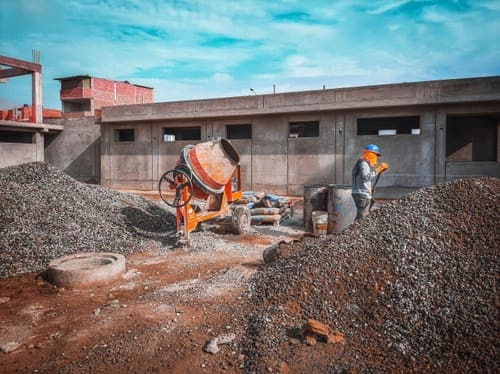
Color is where a slab stops looking like a sidewalk. The decorative concrete finishes we pour most around Springfield are exposed aggregate, integral color, acid stain and shake-on color hardener, and yes, stamped concrete belongs to the same family, just louder. We'll stain interior concrete flatwork in a basement or a shop floor too, not only the stuff out in the weather.
Timing is the whole game. Hardener has to go on once the bleed water's gone, not when somebody's ready for it, and there's no undo button on a slab. Broadcast it too early and you get blotchy color and a surface that dusts off inside a year, which turns into resurfacing on concrete that's barely two winters old.
Everything decorative we finish gets cured and sealed, and that sealer wants redoing every couple of years here. Sooner on a concrete patio you shovel, and sooner still on concrete steps that see ice melt all February.
Resurfacing
If the slab under your patio is still solid and it's just the top that's gone gray, pitted and sad, you don't need concrete removal. You need a new surface on the old one. We shot blast or grind the existing top open, patch anything that calls for real concrete repair first, roll on a bonding coat, then place a polymer modified overlay somewhere around a quarter to a half inch thick.
Prep is the whole ballgame. Skip it and the overlay lets go in sheets, usually right about the time the first February thaw and a winter's worth of road salt get done arguing with each other.
A resurfacing job on ordinary concrete flatwork runs a day or two, foot traffic the next day, and keep the car off a concrete driveway a while longer. Square footage, how much patching, and whether you want plain gray or decorative concrete finishes on top all move the number.
Concrete Flatwork
Flatwork is the poured-flat stuff: sidewalks, garage floors, landings, the pad your grill lives on. Looks simple. That's the trap. What keeps a slab flat through a Springfield winter is everything under it, six inches of compacted process stone, a real four-inch pour, air-entrained mix that can handle freeze-thaw, and control joints cut the next morning roughly every ten feet. Skip the joints and the concrete picks its own crack, usually right where you'll stare at it every day.
We pitch everything about a quarter inch per foot away from the house, so March meltwater heads for the yard instead of your basement.
Finish a slab while bleed water is still sitting on top and you get scaling by the second February, which turns into concrete repair or resurfacing on work that should have been boring for twenty years. Most of our concrete flatwork ties into something else anyway, a concrete driveway, a concrete patio, a walk running up to the concrete steps, and if there's an old cracked slab in the way, concrete removal happens day one. Call me at (417) 464-6822 and I'll come take a look.
Concrete
Concrete is the whole business here, and most of what makes a slab last happens before the truck ever shows up: the digging, the gravel, the compaction, and rebar where it earns its keep.
Out front, a concrete driveway in this city eats road salt and plow blades all winter, so we run an air-entrained mix and thicken the apron. Same thinking on a concrete patio out back, on concrete steps that take boots and ice, and on concrete flatwork like walks and pads. We form curbs with proper joints, and concrete paving for aprons and approaches.
Want it to look like something? Stamped concrete, decorative concrete finishes, and resurfacing over a tired but solid slab all work here.
We also handle concrete repair, concrete removal, a concrete foundation, a concrete retaining wall holding back a Sixteen Acres hillside, and commercial concrete.
Concrete Steps
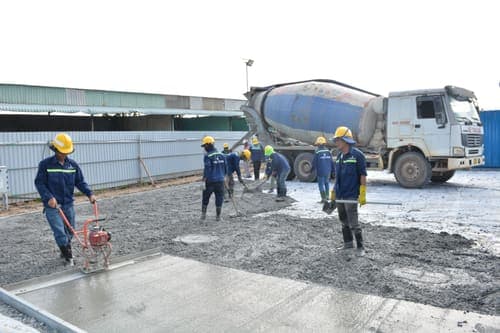
Front stoops around here take a beating. Plow salt, freeze, thaw, repeat from November through March, and a set that was poured on nothing but gravel starts pulling away from the house.
So we dig. Footings go below the frost line, four feet down, with rebar tied through the risers and into the landing so the whole thing moves as one piece or not at all. We keep risers even, seven inches or under, with an eleven inch tread, because the half inch nobody measured is the one the mail carrier catches a toe on. Broom finish, not a slick trowel, unless you want your own personal ice rink by the front door.
If the old set is crumbling past patching, we handle the concrete removal first rather than pouring good concrete steps over bad. Form and pour runs a couple of days; give it a week before heavy use.
Concrete Removal
Half of a good pour starts with a demo hammer. Breaking out a four inch slab is one afternoon; a six inch pad with wire mesh and rebar in it, or a stretch of commercial concrete behind a loading dock, is a different animal. What drives the work is thickness, steel, and whether we can get a machine within thirty feet of the pile or have to wheelbarrow it out past your fence.
Sometimes you don't need concrete removal at all. If the base under it is still sound, concrete repair or resurfacing saves you the dumpster entirely.
But once a concrete driveway has heaved through three Springfield winters, or a concrete patio is spidered corner to corner, patching it is lipstick on a pig.
Done carelessly, demo is where the real damage happens. A jackhammer swung too close undermines a concrete foundation wall. A skid steer chews the lawn, snaps curbs, or shoves a concrete retaining wall out of plumb. We saw clean lines, protect what stays, and haul it out.
We tear out and replace concrete steps, flatwork and paving, and plenty of those jobs come back as stamped concrete once the old stuff is gone. Call Tony at (417) 464-6822 and I'll come look at what you've got.
Concrete Foundation
Your concrete foundation is the one part of the house nobody ever looks at and everybody pays for twice when it's wrong. We dig footings below the four foot frost line, because a shallow footing in this valley heaves every February and by March your basement door won't latch. Rebar goes in the forms, walls get poured in one continuous run wherever the site allows, and the outside gets damp-proofed with perforated pipe bedded in washed stone so groundwater heads for the sump and not your storage boxes. Depth, wall height, whether we hit wet clay or ledge, and how close a truck can park all move the number.
Figure a couple of weeks on a full basement, and no, we won't backfill early. Rushed backfill bows a green wall, and that's concrete repair you shouldn't have needed.
Concrete Patio
A patio is the one slab you actually sit on, so I care most about where the water goes. We pitch your concrete patio about an eighth of an inch per foot away from the house, strip the topsoil, and compact six inches of processed gravel under a four-inch pour with air-entrained mix, because a Springfield February finds every weak spot by March. Skip that base and you get a birdbath outside the slider and heaving that lifts one corner like a bad ice cube tray.
We cut control joints too, so it cracks where we tell it to instead of wherever it feels like it.
Most patios are two to three days on site, and you stay off the surface about a week. Want stamped concrete, decorative concrete finishes, or matching concrete steps down to the lawn? We pour those the same trip.
Concrete Paving
Concrete paving is the flat, load-bearing stuff you roll a truck over: aprons, alleys, loading lanes, service drives behind the shops on Boston Road. We dig down and compact six inches of processed gravel first, because a slab is only as honest as the base under it. Then a 4,000 psi air-entrained mix, five to six inches thick where vehicles run, with joints cut within the first day at a quarter of the slab depth. Concrete cracks where you tell it to or where it pleases, and I'd rather do the telling.
If the old surface is too far gone for resurfacing, concrete removal comes first and we haul it out clean.
Skip the base, over-water the mix, trowel it glassy, and our February thaw will peel the top off like a bad sunburn. That's what kills a concrete driveway, most concrete flatwork, and half the commercial concrete lots I get called to fix.
Concrete Retaining Wall
Springfield's got more hillside than people give it credit for, and if your back yard drops four feet between the porch and the fence, a concrete retaining wall is the only thing keeping that dirt out of your basement window.
We dig the footing below the frost line, tie in rebar, and backfill with crushed stone and a perforated drain pipe so water walks out of the wall instead of leaning on it all winter. Drainage is the step that gets skipped, and it's why you see walls up around Sumner Ave bowing out like they've had a rough night. Where the grade calls for it, we'll form concrete steps right into the terrace so you're not scrambling up a slope.
Most home walls run us three to five days, longer if there's old block or concrete removal first. Call me, Tony, at (417) 464-6822.
Commercial Concrete
Storefronts on Boston Road, mill buildings off Main, apartment lots out in Sixteen Acres. That's most of our commercial concrete work, and a loaded box truck doesn't care that your lot looked great in September. We pour six inches over a compacted base with rebar through it, and we saw the control joints the same day the slab goes down. Four inches with joints cut whenever somebody gets around to it will map-crack by the first thaw, every time.
A plaza job usually starts with concrete removal of the failed bays, then new concrete paving, sidewalks, ADA ramps and the curbs your plow guy has been beating up since February. We phase it so half the lot stays open.
Then the parts nobody photographs: footings and a concrete foundation pad for the dumpster enclosure, a concrete retaining wall where the grade drops behind the building, concrete steps at the side entrance, plus concrete repair and resurfacing on concrete flatwork that still has good years left. Restaurants often want the front handled too, a stamped concrete apron, decorative concrete finishes on a concrete patio for seating, sometimes the concrete driveway approach at the property line. The concrete mix changes with the use, and so does the reinforcement.
Areas we serve
Most weeks I'm on Route 20 or Sumner Ave more than I'm in my own kitchen. Here's where the trucks actually go:
Forest Park, East Forest Park, Sixteen Acres, Pine Point, Indian Orchard, McKnight, Mason Square, Six Corners, Liberty Heights, Brightwood, Boston Road, the South End and Metro Center, plus West Springfield, Chicopee, Agawam, Feeding Hills, Longmeadow, East Longmeadow, Wilbraham, Hampden, Ludlow, Holyoke, Westfield, Southwick, Monson and Palmer.
Where you live changes the job more than people expect. Around McKnight and the South End I'm working on 1910 houses with a stone-and-brick concrete foundation and a drive barely wider than my truck, so concrete removal often goes out by wheelbarrow before a single yard comes in. Those front porches almost always need concrete steps rebuilt too, because a century of road salt eats the treads first.
Out in Sixteen Acres, Wilbraham and East Longmeadow the lots are wide and the sand drains, which is why most of my stamped concrete, decorative concrete finishes and back concrete patio work lands out there, usually alongside a concrete driveway with room to turn around. Longmeadow clay is a different animal. It holds water, heaves in February, and a slab poured on it without a real base becomes a concrete repair call by the third winter. The Orchard and the Chicopee hills give me grade, so a concrete retaining wall goes in before any concrete flatwork does. Boston Road and Riverdale Street keep me in commercial concrete: dock aprons, curbs, concrete paving and resurfacing done in sections so the lot never fully closes.
There isn't a town on that list where I haven't poured concrete in the rain. But a small job in Monson, Palmer or Southwick usually waits until I've got a second one nearby, and Westfield runs start early, because nobody has ever won a fight with I-91 at 7:30.
Frequently asked questions
What kind of concrete work do you do?
Most of our week is concrete flatwork: a driveway that finally gave up, a concrete patio out back, walkways, and concrete steps that have pitched back toward the front door. We also form and pour a concrete foundation for additions and detached garages, and we build a concrete retaining wall when a yard drops off the way so many of them do around Sixteen Acres.
Do you take commercial jobs or just houses?
Both. Commercial concrete here means sidewalks, dumpster pads, ADA ramps, loading aprons and concrete paving for smaller lots, usually 6 inches thick over compacted base with rebar, because a box truck weighs a lot more than your Subaru. We set curbs too, and we stage the pour so half your lot stays open while the other half cures.
What makes one quote higher than another?
Thickness, steel, access and tear-out. A 4 inch residential slab with mesh costs less than a 6 inch pad with rebar mat. Concrete removal adds real hours when the old slab is thick or sits behind a fence a truck cannot reach. Decorative concrete finishes, color and sealer add labor over a plain broom finish. My driveway is cracked. Do I need a whole new one? Usually not, at least not yet. Concrete repair works when the slab is still sitting level and the cracks are tight. Resurfacing suits a surface that is spalling and flaking but has a sound base underneath, since a 3/8 inch overlay only lasts if what is below it does not move. Once sections have heaved or sunk, a new concrete driveway is the cheaper answer over ten years.
How long before I can walk on it and park on it?
Foot traffic at 24 to 48 hours, your car at about 7 days, heavy trucks at 28. Concrete keeps gaining strength for a month after we leave, so we ask you to keep the boat and the loaded trailer off it that first month.
Can you pour in a Springfield winter?
We pour into late fall with an air entrained mix and insulating blankets, and we stop when nights sit below freezing for days at a time. New slabs also hate deicers. Skip the rock salt that first winter and use sand instead, or the same salt the trucks throw down Sumner Ave will pit your fresh surface.
Is stamped concrete slippery when it ices over?
It can be if the sealer goes on slick. We mix a grit additive into the sealer on stamped concrete steps and pool aprons, then reseal every two to three years.
How do we get started?
I come out, measure, look at where the water goes, and tell you what I would do and what I would leave alone. You get a written scope with thickness, reinforcement and finish spelled out before anybody breaks ground.
Ready when you are
Pouring season around here runs from spring thaw to the first hard freeze, and that back end sneaks up on people. Once nights sit below 40, fresh concrete stops curing the way it should, so the fall calendar fills up and I would rather tell you we are a few weeks out than promise you Tuesday and not show.
So call me at (417) 464-6822. What happens next is simple. I come out, walk the property with you, and tell you whether that tired concrete driveway needs full concrete removal or whether resurfacing buys you another ten years. Then you get it in writing. The walkthrough costs nothing, the estimate costs nothing, and neither one commits you to a thing.
If it is the concrete patio you have been talking about since last July, this is the summer.
Tony
P.S. Still thinking? Call me anyway at (417) 464-6822. Worst case, you get my read on it and I get to look at your slab.
See a few of our projects